
The Moment You Notice It
You're backing out for work on a chilly October morning, and the door doesn't come down quite the way it used to. It shudders halfway, pauses, then drops the last foot with a thud. Or maybe you're standing in the garage grabbing the rake and you hear it: a grinding noise on one side as the door opens, like metal rubbing on metal. Nothing has failed yet. But something has changed, and you know it.
That's usually the moment people either ignore it until it breaks, or grab a wrench and make it worse by tightening the wrong bolt. There's a better option: a short, routine check you can do once a season, before the weather turns hard on you. Fall is the ideal time to do it in Vermilion, because once the ice, road salt, and single-digit mornings show up, small issues like a stiff hinge or a loose track bracket get a lot harder to fix safely and tend to turn into bigger ones fast.
Tools You'll Need
- A step stool or short ladder
- A socket wrench or adjustable wrench
- A can of garage door lubricant (silicone-based or a product labeled for garage doors — not WD-40, which washes out and attracts grit)
- A rag
- A flashlight
- Work gloves
The 20-Minute Routine
- Look at the tracks. With the door closed, run the flashlight along both vertical tracks. You're checking for dents, rust, or gaps where the track has pulled away from the wall bracket. Light surface rust from winter salt spray is common and not urgent on its own, but a bent or separated track is a sign to stop and call a technician rather than keep operating the door.
- Check the rollers and hinges. Open the door partway and watch the rollers move through the track. They should roll smoothly, not skip or wobble. Look at the hinges connecting the door panels — any cracks, rust buildup, or visible play in the pin is worth noting.
- Tighten the hardware. Using your wrench, go over the bolts on the track brackets and the hinges. Garage doors vibrate every time they run, and bolts work loose over months. Snug them up — don't overtighten, just remove the wobble.
- Lubricate the moving parts. Spray a light coat of garage door lubricant on the rollers, hinges, and the torsion bar (if you can reach it safely from the ground or a low step). Wipe off any excess with the rag so it doesn't attract dust. This single step does more to quiet a noisy door than almost anything else a homeowner can do.
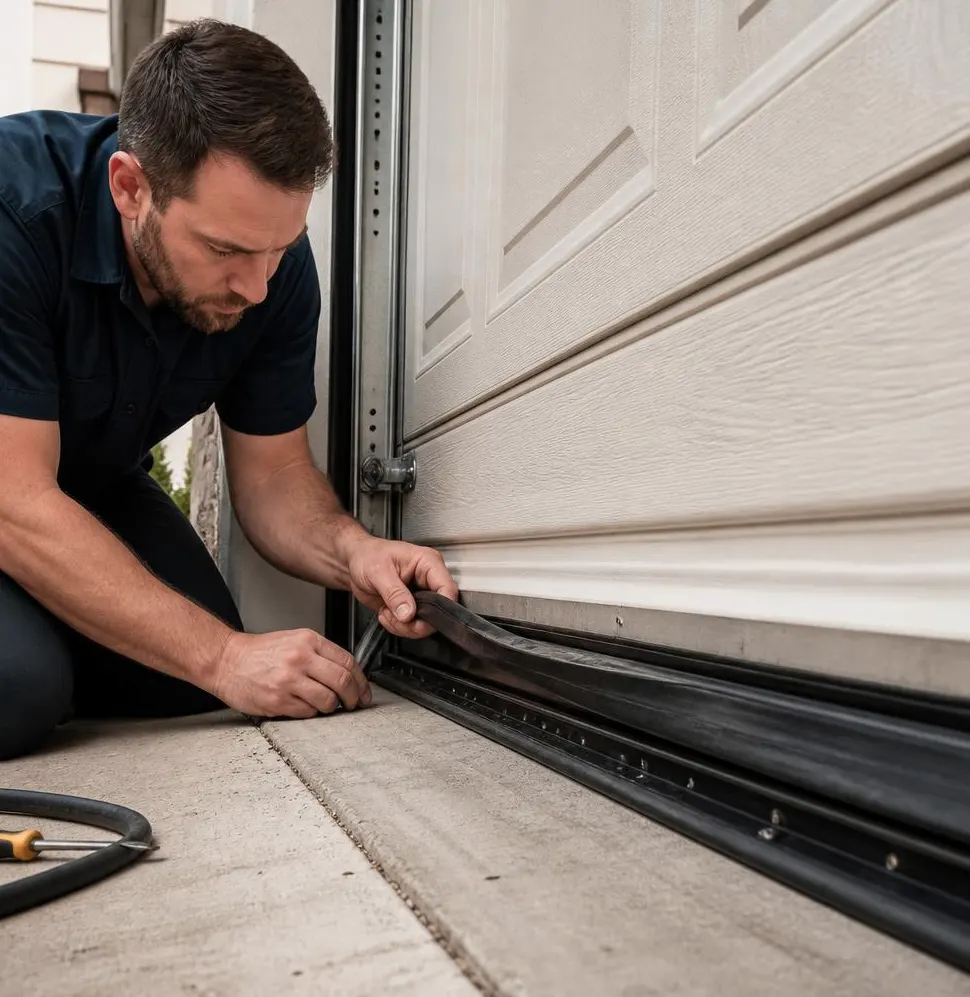
- Inspect the weatherstripping. Check the rubber seal along the bottom of the door and the vinyl strip around the frame. Humid Ohio summers and freezing winters both take a toll on rubber — look for cracking, flattening, or gaps where daylight shows through. Worn weatherstripping is a homeowner-replaceable part and worth swapping before winter if it's cracked, since it's your main defense against cold air and meltwater runoff getting into the garage.
- Clean the track grooves. Wipe out any built-up grime, leaves, or dried road salt residue from inside the track grooves with a rag. This is especially worth doing in fall, before salt and slush season starts tracking more debris in.
- Test the auto-reverse safety feature. Place a 2x4 flat on the ground where the door would close. Run the door down — it should reverse immediately on contact. Then test the photo-eye sensors near the bottom of the tracks by waving something through the beam while the door is closing; it should stop and reverse. If either test fails, stop using the opener until it's looked at — this is a real safety issue, not a cosmetic one.
- Do a balance check. Disconnect the opener using the release cord (usually a red handle hanging from the trolley), and lift the door manually about halfway. Let go. A properly balanced door will stay in place. If it slides down or shoots up, the spring tension is off.
What a Homeowner Can Handle vs. What Needs a Technician
Everything above — visual inspection, tightening hardware, lubrication, weatherstripping swaps, and testing the safety features — is well within reach for most homeowners with basic tools and twenty minutes.
What's not a DIY job: anything involving the torsion or extension springs, the cables, a bent track, or a door that failed the balance check. Garage door springs are under heavy tension and have caused serious injuries when handled without the right tools and training. If your balance test showed the door sliding on its own, or if you heard a loud bang at some point (often the sound of a spring breaking), leave that one to a professional.
When to Call Vermilion Garage Door
If your seasonal check turns up a failed auto-reverse test, an unbalanced door, rusted-through hardware, or a track that's pulled away from the wall, that's the point to call in a technician rather than keep testing it yourself. Vermilion Garage Door handles both garage door maintenance visits — a full tune-up covering everything from track alignment to opener calibration — and spring replacement, done safely with the right tensioning tools. We also handle the kind of mid-winter emergency calls that come from doors that weren't checked before the cold hit: frozen seals, cracked panels, and openers straining against ice-stiffened hardware.
If your twenty-minute check raised any red flags, or if it's just been a while since anyone looked at your door, give Vermilion Garage Door a call. We serve homeowners and businesses throughout Vermilion, Huron, Amherst, Lorain, Sandusky, Avon Lake, Elyria, and Norwalk, and we'd rather help you catch a loose bracket in October than a broken spring in January.